
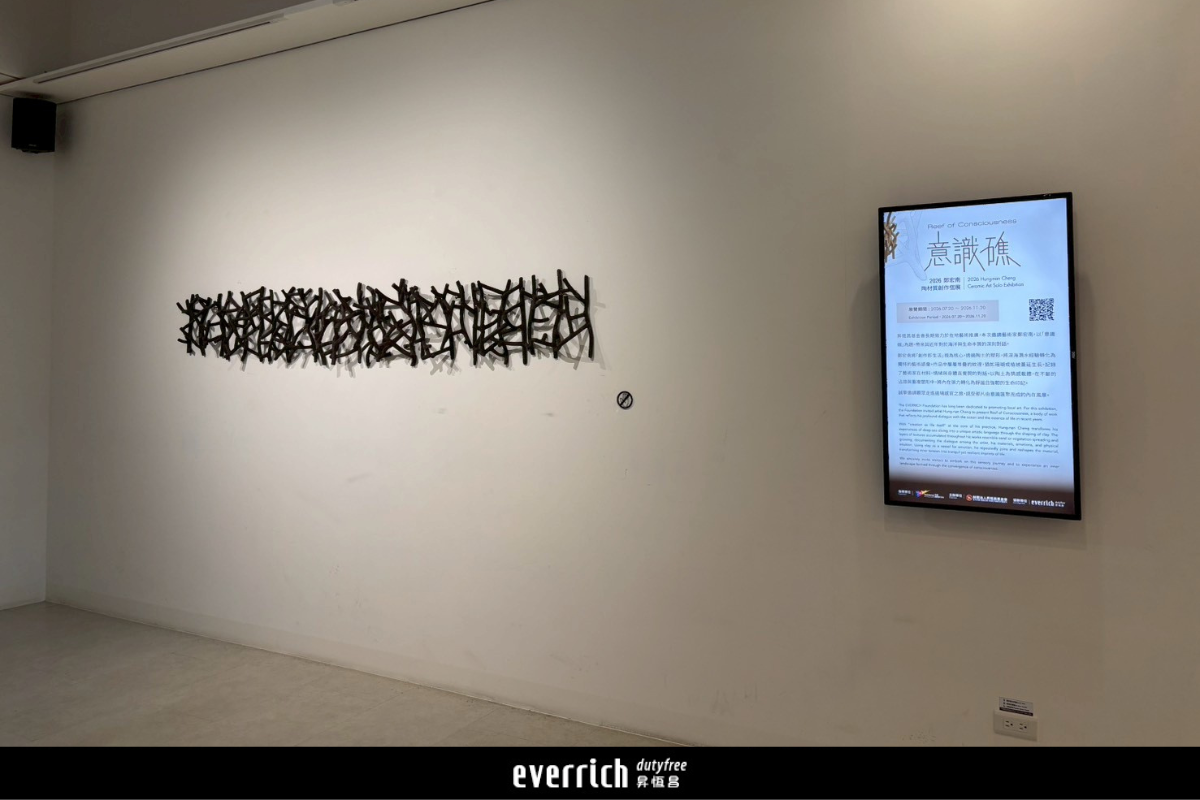
“Reef of Consciousness (意識礁)” – 2026 Hung-nan Cheng Ceramic Art Solo Exhibition
2026.07.20 - 2026.11.20
The EVERRICH Foundation has long been dedicated to promoting local art. For this exhibition, the Foundation invited artist Hung-nan Cheng to present Reef of Consciousness, a body of work that reflects his profound dialogue with the ocean and the essence of life in recent years.
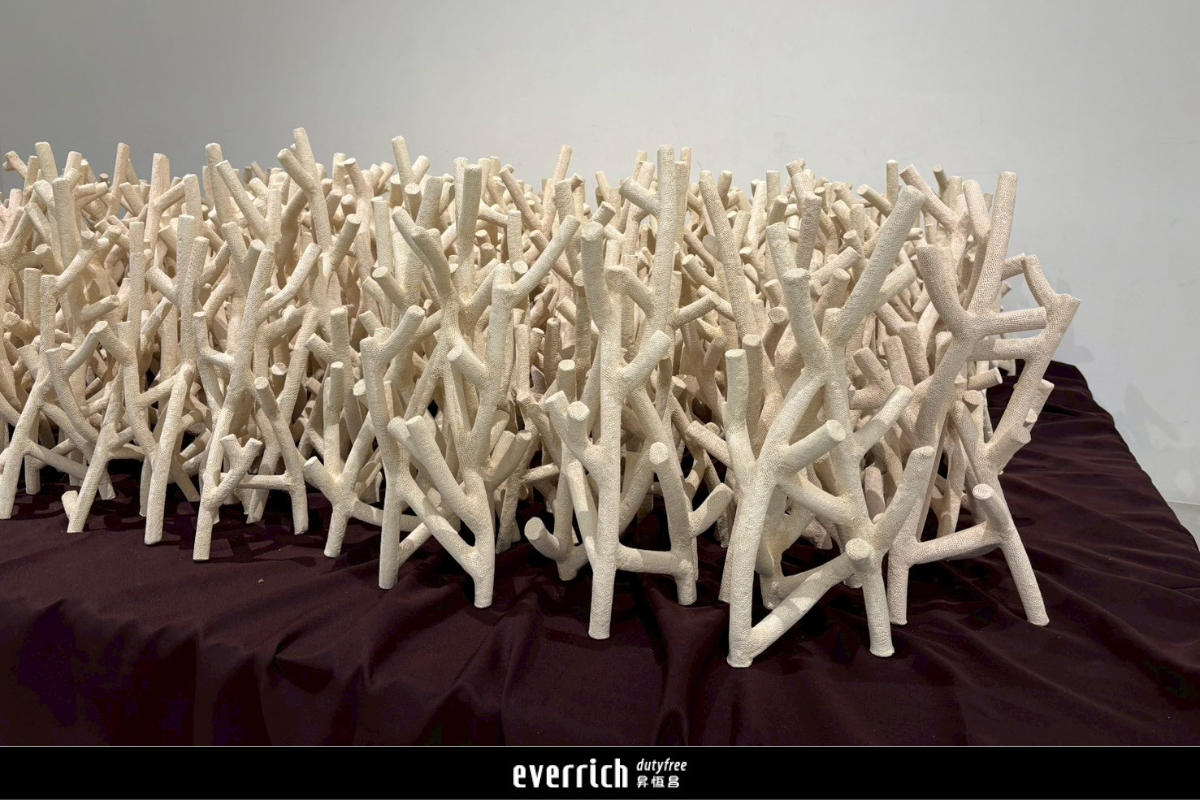
With “creation as life itself” at the core of his practice, Hung-nan Cheng transforms his experiences of deep-sea diving into a unique artistic language through the shaping of clay. The layers of textures accumulated throughout his works resemble coral or vegetation spreading and growing, documenting the dialogue among the artist, his materials, emotions, and physical intuition. Using clay as a vessel for emotion, he repeatedly joins and reshapes the material, transforming inner tension into tranquil yet resilient imprints of life.
Artist Biography
Hung-nan Cheng
For me, there is no boundary between life and creation. Since the age of twenty, the ocean has been the presence that has influenced me most deeply. My years of dedicated diving in my youth shaped the way I perceive the world, teaching me to observe through the sensations of moving beneath the water. This underwater experience has become an inner landscape within my artistic practice.
My works often originate from the emotional tensions found in everyday life and gradually take shape through my interaction with materials and physical actions. During the creative process, I release energy through instinctive, repetitive gestures such as layering and joining, while also responding to my reverence for nature. When my emotions are calm, the lines naturally flow; when my emotions become turbulent, I allow them to settle before looking back with rational reflection and transforming them into forms. At times, I continue attaching clay in a state of uncertainty, only to realize later that the work has naturally spread and grown like coral or plants.
I continuously move between the possibilities of materials, the release of emotions, and intuitive forms, allowing creation to become an act that draws close to the state of life itself. To me, the ocean is not merely a symbol of healing and freedom but also a reminder—a reminder to always maintain reverence for life and art.
The Reef of Consciousness Where Hung-nan Cheng Dwells
Written by Yuan-ta Hsu, Assistant Professor, Department of Art History & MA Program, PhD Program in Art History, Criticism and Cultural Relics, Tainan National University of the Arts, Tainan National University of the Arts
When it comes to diving, perhaps the most captivating description is that it is “a dialogue with the body.” Although everything appears calm and clear above the ocean’s surface, the moment one descends beneath the water, an entirely different world emerges.
As the body becomes fully immersed beneath the surface, the noise of the land, the force of gravity, and even the passage of time are all taken away by that profound blue. As the depth increases, light is gradually filtered through the layers of water, and the complexity of the world’s colors slowly fades away, leaving only a pure and endless blue. The body loses its weight, suspended within an almost ethereal embrace. How can one describe this sensation of weightlessness? The world becomes utterly silent, so silent that the only sound remaining is the quiet rhythm of one’s own existence.
“Whoosh-hiss—”
A long, slow, and rhythmic trail of bubbles rises with each movement of the chest. This is the only dialogue between oneself and the vast ocean, and the purest affirmation of one’s own existence.
Beneath the ocean’s surface, the boundaries of vision dissolve into the water, while the other senses gradually slip beyond control. Instead, one begins to feel the cold touch of seawater against the skin and becomes increasingly aware of the delicate rhythm between the expansion and contraction of the lungs with each breath. In this weightless space, all worries, external identities, and attachments quietly dissolve. One is no longer someone who must navigate the complexities of society, but simply a living being who is breathing, bare and tranquil, brought infinitely close to one’s own soul.
For many people, diving may be a mesmerizing experience during a journey. For the artist Hung-nan Cheng, however, it has been his way of seeing the world for most of his life, as well as the place where he finds refuge for his soul.
Having practiced diving extensively since the age of twenty, the ocean has become a deeply influential presence in Hung-nan Cheng’s life. It is no longer merely a geographical entity but an internalized system of perception. As the boundaries between life, work, and artistic creation gradually dissolve, this way of seeing through underwater immersion has become an inherent state of being. Even as his distance from the actual ocean has grown over time, the suspended sensation of drifting in deep waters continues to seep into his everyday life, becoming the inner landscape where he dwells and creates.
Upon entering his studio and facing the weighty forms of clay before him, he once again leaves the restless world behind. At this moment, he becomes once more the diver moving alone through the deep sea, accompanied only by the bubbles rising through the water. Yet this time, he is not exploring unknown currents but the ocean of consciousness deep within himself, at times calm and at times turbulent.
Hung-nan Cheng’s works often originate from the emotional tensions awakened by everyday perceptions, gradually revealing themselves through the encounter between materials and physical labor. Through repetitive gestures such as kneading and joining, almost instinctive in nature, he releases energy. Once the turbulence subsides and emotions settle, he looks back with a rational gaze, transforming invisible waves into contemporary forms that can be read and experienced. While working with clay, he often continues adding and joining pieces in a state of uncertainty. When consciousness eventually returns to shore, he frequently discovers that the work has already spread and grown naturally like coral or underwater organisms, following the instincts of life itself.
Building Reefs Within a Habitat
The definition of “habitat” is the natural living environment that an organism chooses to inhabit. This choice is an expression of life’s instinct rather than something arbitrary or accidental. For Hung-nan Cheng, working with stone and clay represents the natural manifestation of his consciousness seeking a place of refuge amid the noise of the terrestrial world. Though seemingly subjective, this choice actually follows the fundamental logic of life itself, carrying both the bodily memories accumulated through years of diving and the emotional tensions gathered through daily experience.
In the deep sea, buoyancy erases the physical weight and contours of the body. The sensory experience becomes entirely different from that on land, and one no longer relies on standing firmly on the ground to define the boundaries and existence of the self. The immense body of water embraces the human form. As one slowly drifts and floats, one must surrender the control held on land, allowing the ocean to envelop and carry the body.
When this bodily memory of “yielding” is brought back into the studio, his relationship with materials begins to transform. In traditional art history, carving often implies imposing subjective will upon an object in order to achieve a certain representation. However, Hung-nan Cheng regards the act of creation as a form of “dwelling.” Within this reconstructed habitat of consciousness, creation is not merely the making of the self, but a process in which the artist and the material respond to and accommodate one another. When labor is no longer about demonstrating human dominance, the rigid boundary between material and subject naturally dissolves. The creator sheds the role of master and becomes an inhabitant who grows together with the environment.
Thus, as Hung-nan Cheng unconsciously joins pieces of clay, the moisture of the material shifts between wetness and dryness, and the physical boundary between skin and clay gradually blurs and merges. Through these intensely demanding, yet extraordinarily slow, processes of labor, rational calculation quietly fades away.
Yet wherever life takes root, it inevitably leaves traces of its existence. Within the repetitive physical labor of kneading and joining, the emotions and memories of the reef builder silently permeate the work. These states of mind, sometimes chaotic and sometimes tranquil, resemble underwater currents in the deep sea. Accompanying each breath during creation, they are transformed into the holes and undulating surfaces formed through shaping. In his work That Reef (那片礁), the coral-like clay structures slowly grow, with countless branches layered and gathered together. They are remarkably similar to one another, yet each possesses its own distinct character. Hung-nan Cheng embeds his bodily memories and emotions within these reefs created by his own hands. The countless openings within the reef provide a place to hold those scattered and unstructured souls. Through this process of following instinct, this reef bearing the marks of life gradually grows into its purest form, becoming the Reef of Consciousness (意識礁) where he finds his own place of dwelling.
Just as diving allows one to gradually shed one’s socialized identity and return to a more primal state of being, the perception of “time” within a habitat is also transformed. Living beings within their own habitats operate according to their internal biological rhythms. Likewise, when consciousness becomes fully immersed in the state of labor, the external measurements of social time, those clocks and deadlines, are completely severed. What replaces them is “bodily time,” rising and falling with each breath. Every depth of carving and every extension of clay progresses according to the rhythm of the present moment. Ultimately, these preserved reef-like forms are no longer merely static sculptures, but countless moments sealed in time. Those condensed fragments of experience become the holes and textures upon the reef, allowing fragmented emotions and memories to find a permanent place of rest within a habitat that exists beyond external time.
Hung-nan Cheng’s creative practice continuously moves between the possibilities of materials, the release of emotions, and intuitive forms, allowing creation to become an act that draws close to the state of life itself. In the end, these pieces of clay are no longer merely materials, but the Reef of Consciousness (意識礁) that he has built, brick by brick, for himself amid the noise of the terrestrial world.
He once said, “To me, the ocean is not only a symbol of healing and freedom, but also a reminder, a reminder to always maintain reverence for life and art.” It is this reverence that transforms his creative practice into a long and profound dive, a continual pursuit of a state closer to the truth of life.
“Whoosh-hiss—”
As the blue gradually envelops the body and currents guide consciousness deeper and deeper, one slowly drifts away from the noise of the land. As the edges of vision disappear into the depths, there, before one’s eyes or somewhere farther beyond, quietly stands a reef, soft yet solid, seemingly unreal yet undeniably true, that reef.
Date:2026.07.20~2026.11.20
Location:Kaohsiung International Airport East Area Gallery
Supervising Organization: Kaohsiung International Airport
Organizer: Ever Rich Foundation
Co-Organizer: Ever Rich Duty Free Shop